Visiting the University of Edinburgh’s Anatomy Museum was
interesting if not a little unnerving for someone who doesn’t usually draw
amongst brains and skeletons. I found the change refreshing and it gave me the
opportunity to broaden my mind towards my anatomy project. Whilst in the
presence of juvenile skeletons and partially decomposed heads, it was a stark
reminder of mortality and what is to come. I found the reactions of myself and
my classmates interesting, some weren’t phased whereas others like myself
grimaced. It made me wonder why I found it disturbing. I have always had a
phobia about death and all things related to it, which in essence involves the
human body and how it works. I contradict myself however as I thrive off gory
films and all things sinister, perhaps that’s where my anxiety has derived
from. I used to suffer severely from panic attacks; anything from driving past
my local Toys ‘R’ Us to watching Tarzan used to trigger them. As I have gotten
older I have learnt to control my thoughts however sometimes it is inevitable.
All these thoughts and reflections reminded me of the poet Emily Dickinson. It gave
me the idea to incorporate her literature alongside my work as I am very fond
of her and she can relate. I am looking forward to the next museum visit.
Thursday, 30 October 2014
Thursday, 16 October 2014
The Bauhaus
The
Bauhaus
Famous
for its relationship with modernism and mapping the creative output that we
have today, the Bauhaus School of Design in Germany emerged at a time revolved
around sheer social upheaval. “Between 1920
and 1930 Modernists throughout Europe argued violently through letters,
articles and personal confrontations and by 1935 they had drifted apart in
terms of their actual design work.” (Greenhalgh, 1990:6)
Founded in Weimar by Walter Gropious in 1919, the pioneer
phase was c1919 – 1930. Greenhalgh had 12 terms of definition for the pioneer
phase, one of which was ‘Internationalism’. They aimed to change society for
the better, creating opportunity to change the structure of art and design
education. With other masters such as Adolf Meyer (rationalism) and Johannes
Itten (mysticism), the difference in views caused variation in ideology. “The
Basic Course” emphasised practical formal teaching, the study of materials,
observation and composition. The process of moving up each year whilst
narrowing your specialism down, “If he is to work in wood, for example, he must
know his materials thoroughly.” (Cited Naylor)
The Bauhaus Manifesto (1919) was a promotional campaign positioning
their ideologies. The building reflected a new way of thinking and in itself
was a big part of the experience. In 1925 they moved to Dessau, the most influential and well known
building when people think of Bauhaus. It was created to fit into the new-found
technology, new politics and new ethos. It focussed on light and function and
was central to everything they did whilst they shifted from craft to industry.

| Analytical drawing, Ida Kerkovius. http://bauhaus-online.de/en/atlas/werke/linear-analysis-of-a-still-life |
Early experimentation and the rise of collage were aesthetics
of urbanism. (paul citroen the big city)(Werner Graeff composition 2)
Experiments began to form using collaborative work between music, art and film
students. Looking at this in present day as an illustration student, my first
thought was, ‘Really…?’ However, this philosophy can relate to Oskar
Schlemmar’s Triadic Ballet (1923); I can respect that this was where it all
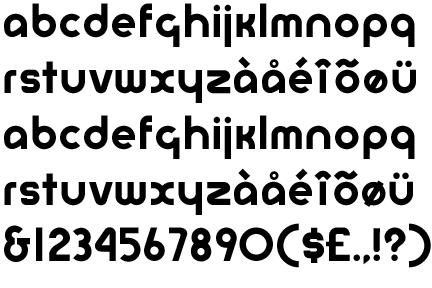
started. Another revolutionary discovery was Herbert Bayer’s Universal Type (1923.) His belief
mirrored that of artists; that type should follow the technology. The need for
thick and thin bars in lettering was no longer needed due to new mechanical
printing technology i.e. Times New Roman. Bayer’s Universal type also
represented the desire for a non-hierarchal society whilst the Bauhaus
attempted to break away from class divisions (the idea that a glassmaker is
better than a woodcutter.
| Bayer's Universal Type http://marcleacock1.wordpress.com/2011/10/21/ what-was-the-underlying-principle-behind-herbert-bayers-universal-alphabet/ |
The legacy of the Dessau years comes through furniture,
domestic products and structural integrity. “From their experimentation will
evolve standards for industrial production.” (Gropious 1923) Haus am Horn is
significant in seeing the shift as well as Marcel Breuer’s club chair. Their inspiration came
from the economy of materials and function, reducing the amount of materials,
aimed for mass production. The kitchen design in Haus am Horn (1923) shows the
new contemporary idea of rationalising how they use spaces. In present day we
contradict the Bauhaus’s desires and intentions, they designed for the masses
yet it costs £200+ for a reproduced design of a chair and X amount for an
original Bauhaus piece. Mass production is not how it used to be not only is it
a way to create cheap and low quality products, people no longer want what
everyone else has. Up/recycling is the new craze. This links to the lack of
desire to be caught in the mainstream of society today. Although this isn’t the
only reason for the desire to purchase cheap second hand furniture, people look
for quality pieces that can last years and years, unlike the MDF bookshelf from
IKEA.
The value of Bauhaus has changed radically compared to how
it used to be. Objects designed and made by them are now seen as a statement to
have and people pay thousands. The contrast between designing for everyone and
now it being a symbol of wealth represents how we have completely turned the
Bauhaus’s desires upside down. We haven’t in respect to The Basic Course
however if I was to buy a Bauhaus kettle I most certainly would never use it.
Friday, 10 October 2014
John Fardell
![]() |
| http://twoheadedthingies.blogspot.co.uk/ 2012/09/is-it-bad-nah-its-wicked.html John Fardell Viz Magazine |
Cartoonist
and illustrator, John Fardell, visited today to talk to us about his work. He
discussed past experiences and explained about how he had always wanted to be
in this line of work. However, like the usual aspiring artists, he got informed
to take a more ‘sensible’ route, which he didn’t. This lecture definitely
enlightened me, I have ideas of my own and I feel a great deal more confident
in how I am going to achieve my goals.
John
Fardell eventually went down the route of creating cartoon takes on articles; cynical
and witty comic strips for Viz Magazine and Liss Magazine. He created a
connection between Charlie Chaplin and comic strip work - you can learn a lot
from silent movies; narrating a story through pictures. The less need for
words, the better. He doesn’t feel the need in telling a story twice though
literature and imagery.
| http://www.fantasybookreview.co.uk/ /The-Last-of-the-Sky-Pirates 2014 |
Fardell
focussed mainly on his book “The Day Louis Got Eaten.” It put things into
perspective on how much time it can take to create a picture book. His way of
working is precise and slow with a lot of rough drafts before the final main
image which contrasts massively to Quentin Blake who does a few quick solid
sketches until he gets one he likes. It’s interesting how different people and
how different the outcomes are yet both work just as well as the other. As we
went through the book, the importance of page turners became apparent. The need
to have a hint of something happening on the next page; enough to show
something is there however not enough to give it away. Some hints you don’t
even notice until you go back and read it again. He went through a lot of
drafts and implications that the illustrations had, and he explained how he
solved them. I felt like I could relate to all of this, it excited me how I could
understand someone like a mathematician understands equations.
I
learnt a great deal about techniques and various mediums. The direction in
which a book’s pictures flow can sometimes be extremely effective and psychologically
purposeful. The fact we read left to right means that the rule can also apply
to illustrations and their characters. The same rule applies to film makers, if
someone is battling the elements, they can be seen walking left across the
screen, which we could relate to as quite a struggle. Louis’s sister was always
travelling right across the book until the end when they turned left back
towards home.
A
problem I always had whilst painting has suddenly been solved as well. The fact
I have only just found out about water colour ink due to Fardell’s recommendations
makes me question myself as an illustration student. I have always painted
first then applied pen after, I am so excited to purchase some waterproof ink
and try it out using a dip pen which he also recommended to us. I have always
questioned my ability when using technology too when enhancing/creating my
work. I have avoided Photoshop like the plague however I have been shown how it
can be an implicitly useful tool. He also referenced artist William Heath
Robinson as an inspiration.
| William Heath Robinson (1872 - 1944) 'The Nightingale' http://literature.wikia.com/wiki/The_Nightingale |
Overall,
this lecture left me feeling elevated, educated and motivated.
Tuesday, 7 October 2014
Revel Archive
Today we visited the research centre in the Main University
Library to investigate a collection of ‘Revel’ party invitations from the
archives. We also watched a short silent film on one recording of a Revel
party. The Revel Christmas party has happened once a year for the Edinburgh
College of Art since the 1920’s and each year students collaborate to create an
invitation. This was extremely interesting as they were set out chronologically
so you can see the change in designs clearly. The first few were traditional
however it then progressed to more decorative and thought out designs. This was
when the students were allowed to take over.
The short film was interesting although also disappointing.
The much more naïve and playful behaviour displayed made me question what had
changed. Whilst looking at our expressions, and my own, we were confused as to
why they were doing the things they were doing for entertainment. Another thing
that didn't help with this gutted feeling is that the invites now are simply
slips of paper. Yes we still get the opportunity to design the flyer however
the invitations had always been just as special. It’s like our society don’t
get excited over singular events such as this anymore. There are bigger and
better things to do and a party isn’t a party without sharing it with everyone
online. Watching the film made me wonder where the magic had gone. Admittedly I
love traditional things so perhaps that’s why I feel like this. It’s like when
people have short hair, they want long hair, when people have long hair, and
they want short hair. I have yet to attend a Revel party so maybe I’m being
a bit hasty.
Nonetheless the flyers and invites were all beautiful in their own rights, they were extremely interesting to look through. Also looking at the fashion from the photo's made me think about the lectures I had had previously.
Fashion Modernity
Society began to focus on new attitudes towards women.
Fashion and the healthy body collaborated and reflected the social and cultural
changes taking place in the 20th Century. Fashion had always
expressed wealth and identity, Queen Elizabeth I from the 15th
Century had lavished in fine cotton and jewellery during the making of her
portraits; her clothes demonstrated her wealth and power.
Growing urbanisation in the 19th Century caused
anonymity, people began to want to stand out. For the German Sociologist, Georg Simmel, the rapid
development of fashion was bound up with growth of city life and individualism, "The deepest problems of modern life derive from the claim of the individual to preserve the autonomy and individuality of his existence in the face of overwhelming social forces, of historical heritage, of external culture, and of the technique of life."(http://www.brainyquote.com) The system of imitation allowed people to be part of a group or clique. I found
it interesting that he argues that there is no escape from fashion. Those who
declare to be unfashionable are simply engaging in a form of imitation, which
may itself become ‘fashionable.’
This is evidently a universal thing as I can
agree with that idea in present day.
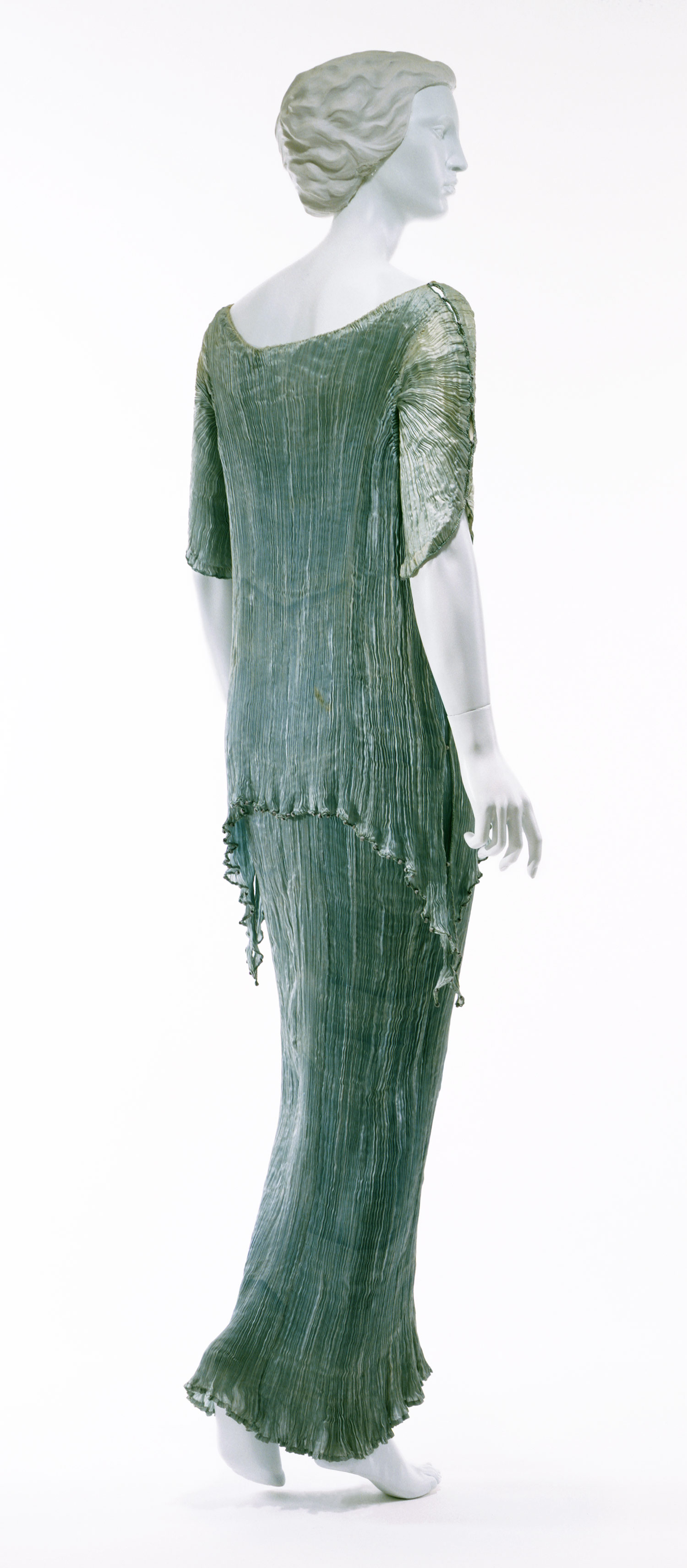
Mariano Fortuny and Paul Poiret had new ideas
revolving around ballet, orientalism and expressionism. Their designs were lose
and free-flowing, expressing the female form and the art of the human body.
Sonia Delaunay’s designs for Cleopatra mirrored the fashions of transport and
life style opportunities; the excitement of the city. The new swimsuit design
and simultaneous clothing reflected the modernistic ideas of anti-traditional
culture. Rejection of decoration and promotion of unisex clothing deemed
wearers unfeminine; women playing tennis, swimming and driving.
| Palmolive advert 1924 http://www.vintageadbrowser.com/ beauty-and-hygiene-ads-1920sPalmolive Company’s Palmolive Soap |
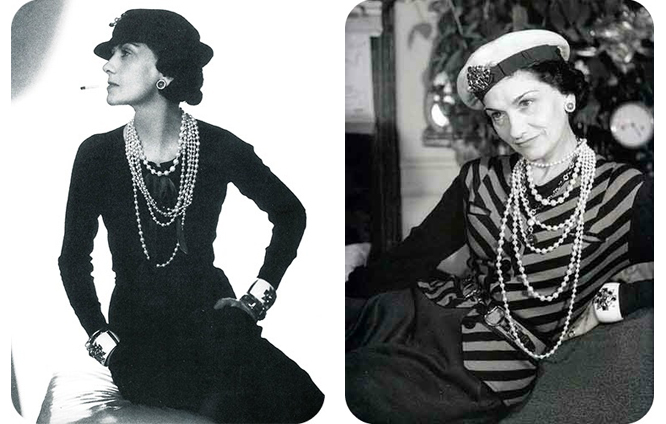
| Gabrielle Bonheur Chanel http://www.vintagedancer.com/ /1920s/1920s-style-guide-womens-fashion |
The modernist response, The Bauhaus, was rather anti-fashion. The
experimented with new materials, not directly concerning them with fashion. Oskar Schlemmer and the Triadic
Ballet showed modernist preoccupation with the machine, only symbolic
movements and geometric shapes where expressed. Actors were reduced to singular
jagged movements like puppets on a string. This was fashion in an art form,
some in society craved the need to be different, to stray themselves from the
mainstream current. You could say fashion is innovation gone mad, the superficial side of it
has created judgement and discrimination universally. However some argue with
this.
| http://jocelinehowe.wordpress.com//2013/08/26/triadic-ballet-oskar-schlemmer-1927/ Oskar Schlemmer's dances (1927) Aug 2013 |
Uploaded on 21 Feb 2012
A film in three parts after Oskar Schlemmer's dances (1927)
Book and Choreography: Margarete Hasting, Franz Schömbs, Georg Verden.
Rehearsal: Hannes Winkler.
Reconstruction of the costumes: Margit Bárdy.
Art Consulting: Ludwig Grote, Xanti Schawinsky, Tut Schlemmer.
Dancers: Edith Demharter, Ralph Smolik, Hannes Winkler.
Music: Erich Ferstl.
Camera: Kurt Gewissen.
Cut: Johannes Nickel.
Production Director: Helmut Amann.
Production: Gottfried Just.
Subscribe to:
Posts (Atom)