Society began to focus on new attitudes towards women.
Fashion and the healthy body collaborated and reflected the social and cultural
changes taking place in the 20th Century. Fashion had always
expressed wealth and identity, Queen Elizabeth I from the 15th
Century had lavished in fine cotton and jewellery during the making of her
portraits; her clothes demonstrated her wealth and power.
Growing urbanisation in the 19th Century caused
anonymity, people began to want to stand out. For the German Sociologist, Georg Simmel, the rapid
development of fashion was bound up with growth of city life and individualism, "The deepest problems of modern life derive from the claim of the individual to preserve the autonomy and individuality of his existence in the face of overwhelming social forces, of historical heritage, of external culture, and of the technique of life."(http://www.brainyquote.com) The system of imitation allowed people to be part of a group or clique. I found
it interesting that he argues that there is no escape from fashion. Those who
declare to be unfashionable are simply engaging in a form of imitation, which
may itself become ‘fashionable.’
This is evidently a universal thing as I can
agree with that idea in present day.
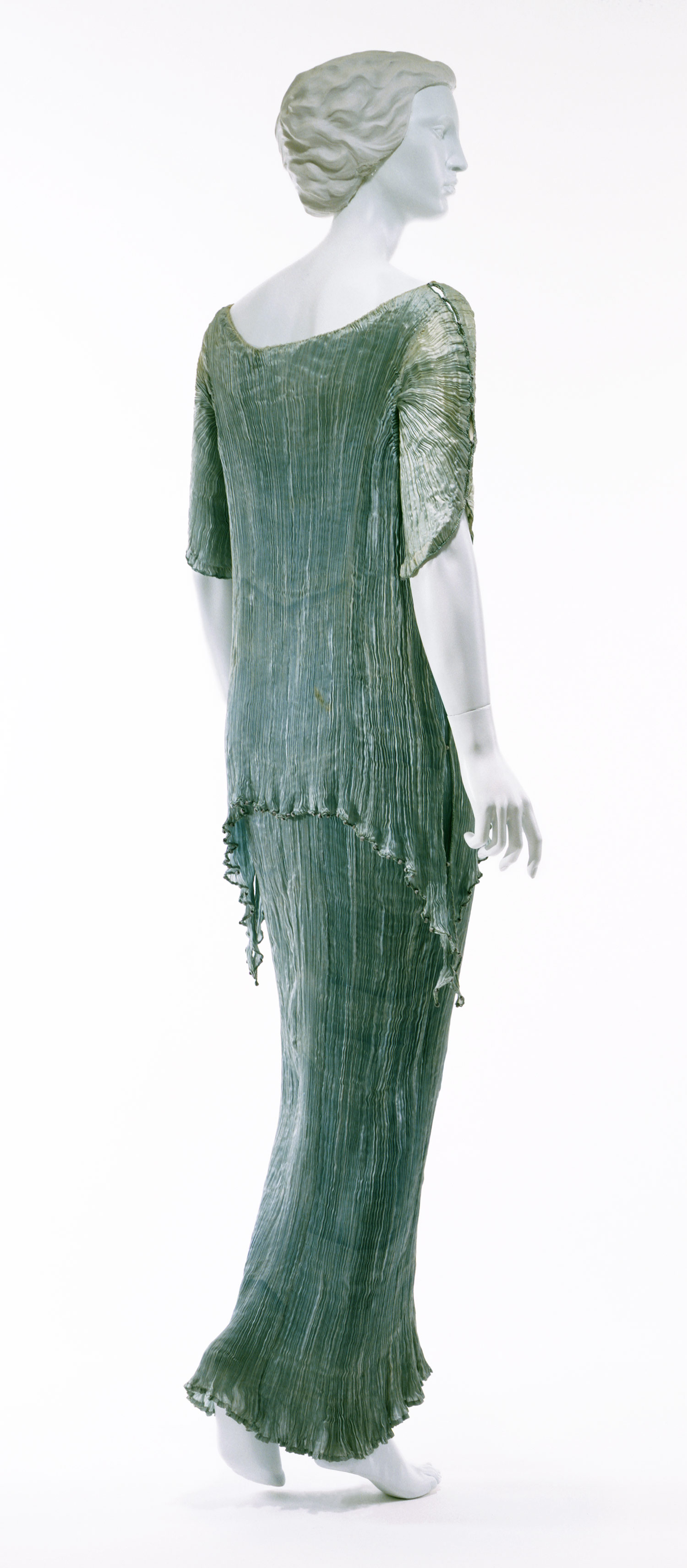 |
 1979.344.11a,b)". In Heilbrunn Timeline of Art History. New York: The Metropolitan Museum of Art, 2000www.metmuseum.org/toah/works-of-art Oct. 8th(Below Above) Paul Poiret and Denise,Zouave dressCopyright Lipnitzki/Roger-Viollet/Getty Images |
 |
| Palmolive advert 1924 http://www.vintageadbrowser.com/ beauty-and-hygiene-ads-1920sPalmolive Company’s Palmolive Soap |
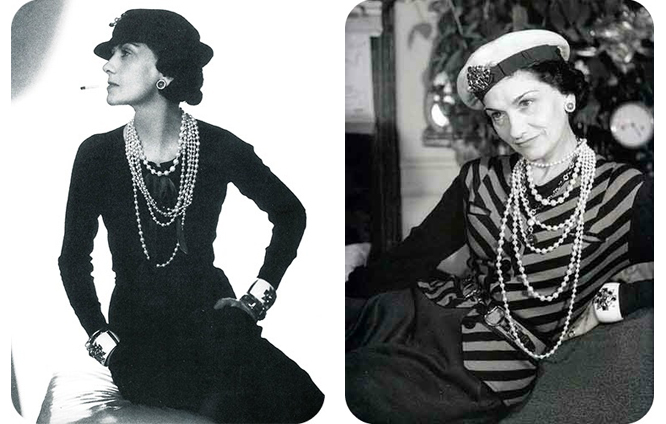 |
| Gabrielle Bonheur Chanel http://www.vintagedancer.com/ /1920s/1920s-style-guide-womens-fashion |
The modernist response, The Bauhaus, was rather anti-fashion. The
experimented with new materials, not directly concerning them with fashion. Oskar Schlemmer and the Triadic
Ballet showed modernist preoccupation with the machine, only symbolic
movements and geometric shapes where expressed. Actors were reduced to singular
jagged movements like puppets on a string. This was fashion in an art form,
some in society craved the need to be different, to stray themselves from the
mainstream current. You could say fashion is innovation gone mad, the superficial side of it
has created judgement and discrimination universally. However some argue with
this.
 |
| http://jocelinehowe.wordpress.com//2013/08/26/triadic-ballet-oskar-schlemmer-1927/ Oskar Schlemmer's dances (1927) Aug 2013 |
Uploaded on 21 Feb 2012
A film in three parts after Oskar Schlemmer's dances (1927)
Book and Choreography: Margarete Hasting, Franz Schömbs, Georg Verden.
Rehearsal: Hannes Winkler.
Reconstruction of the costumes: Margit Bárdy.
Art Consulting: Ludwig Grote, Xanti Schawinsky, Tut Schlemmer.
Dancers: Edith Demharter, Ralph Smolik, Hannes Winkler.
Music: Erich Ferstl.
Camera: Kurt Gewissen.
Cut: Johannes Nickel.
Production Director: Helmut Amann.
Production: Gottfried Just.

No comments:
Post a Comment